There is a real absence of obedience in today’s culture. The American dream of personal independence has become a nightmare in which the absolute rule is the lack of rules. Moral anarchy reigns, all stemming from a rejection of divine and human authority. This culture instructs us to take charge of our life, ignoring the reality that we are never really in charge.
A real man gives his life to God and His provident design, and finds in giving his life that he lives it better. It is in obedience to God’s authority that we find fulfillment.
Obeying like the Lord
Obedience today brings up images of slaves and masters, where the oppression of one leads to the profit of the other. There is nothing like that in our relationship with God. God doesn’t seek to bend us to His will through acts of force. He opens to us the opportunity to obey Him, as He did Adam, and lets us either follow Him or reject Him.
Freedom, in the Christian understanding, is that ability to embrace God. Likewise, God is not a master who will suffer if the slave refuses; God needs nothing from us. Rather, it is in obeying God, in aligning our wills to His, that we find true purpose.
We cannot advance in the spiritual life if we are not obedient to God. We can never wrestle grace from Him. Only in imitating Christ, who was “obedient to death, even death on a Cross” (Philippians 2:8), do we draw closer to God, and therefore grow in life with Him, that is, grow in grace. God has a plan for us, namely our vocation or calling, and it would be in our best interest to listen to Him. He is God, after all.
The Bible: A Story of (Dis)obedience
When we look back at the problems of salvation history, we see a pattern of disobedience. Adam disobeyed God’s command to avoid the forbidden fruit. Israel’s long history of broken covenants are not because God fails (in Dr. Scott Hahn’s words, God is “a Father who keeps His promises”), but rather because the Israelites turn away from their calling.
We see a similar phenomenon in Church History; ecclesiastical disasters stem from when priests, bishops, popes, and laymen alike put their own desires over their general vocation as Christians.
We see this in our own lives. What are our sins, but our defiant claim to know the rhythm of our life better than our God, our Creator, and our disobedience to His law? Crises pile upon each other when we try to direct our own lives, rather than letting His hand guide us.
A Man after God’s Own Heart
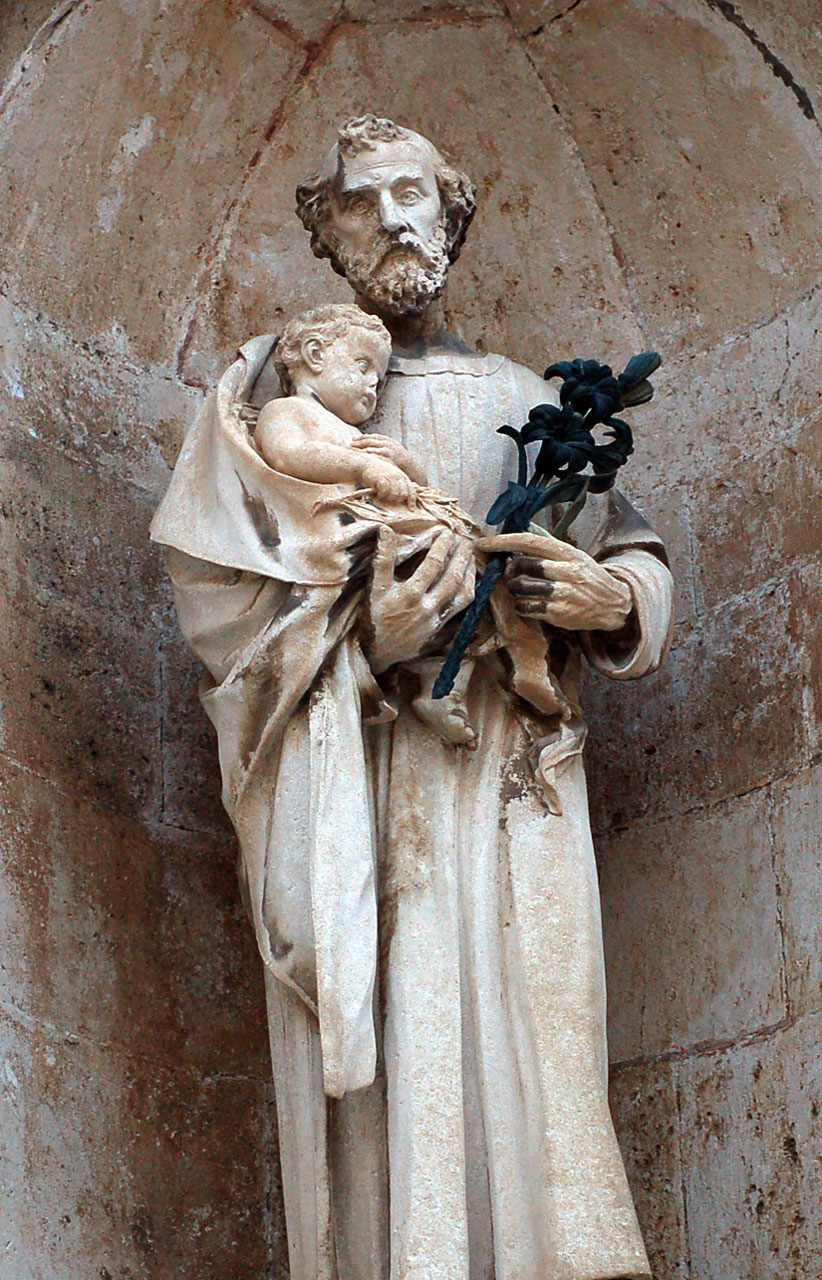
We find in St. Joseph a refreshing model of obedience. Consider how he follows God’s commands through the angel. He, heir to the throne of David the king, lives the humble life of a carpenter. Betrothed to the young virgin Mary, he perhaps saw his life as one of comfort: a steady job, a loving wife, a simple existence.
Then he receives his call: be earthly father to God Himself.
He could have said no (it seems he struggled with this vocation, as indicated by his attempt to divorce Mary quietly). Instead, he listens to the angel, travels to Bethlehem, and apparently sets up a home there after the birth of Christ. He again listens to the angel and flees to Egypt, and originally sought to return to Bethlehem (Matthew 2:20-21), but changes his plans in accord with God’s will and returns to Nazareth.
The key to this virtue of obedience is trust. We submit to God’s authority and have trust in Him because of that authority, which flows from His relationship to us as Creator and from the fact that He is Love. This trust is the true meaning of Faith. Life does not work when we try to conform God to our will, rather than conforming ourselves to His will.
The Best Way to Get God to Laugh
In my own life, I tried to order God around. Everything I mentioned above, about putting our wills against God’s and struggling in disobedience, echoes my own story. I put conditions on what I expected from Him, particularly in regards to His vocation for me. Looking back, I can see how, even with my attempts to derail His plan for me, God still guided my life.
As I finished college, I expected one of many area high schools to hire me. After all, I had double majored and had completed a teaching practicum in an area high school. In God’s design, I started teaching middle school. During that year, I tried to discern God’s call for me. Single and frustrated at my teaching situation, I gave God an ultimatum: if I was still frustrated with teaching at that school, if a girl I liked turned down dating me, and if I was still unsure of my vocation, I would meet with a vocations director. Time met the conditions, and I met with a vocations director; he told me to wait and to keep teaching at the school.
That spring, however, my contract was not renewed, so I became unemployed for a year. This allowed me to step back and stop fighting God. Once I did that, my life fell into place with shocking speed. I began graduate school and ended up studying in Front Royal, VA, where my current wife was then living. We started dating, and because of my graduate school work, another middle school hired me. The stability of the job led me to complete my graduate degree. I soon married my now-wife and, after teaching at another middle school, began teaching at a high school. If I had continued to fight God’s Providence, I would not be where I am now. Obedience to God brought about a better outcome than I could have ever foreseen.
If we put our trust in God, relying on Him for our well-being, and respect others as children of God, we will be truly happy. Not only that, in embracing these three virtues of poverty, chastity, and obedience, we will at last be true men of God.
Editor’s note: This article is the final part of the four part series, “Becoming True Men of Christ.” You can receive email notifications or sign up for our feed on Facebook and Twitter.


Leave a Reply
You must be logged in to post a comment.